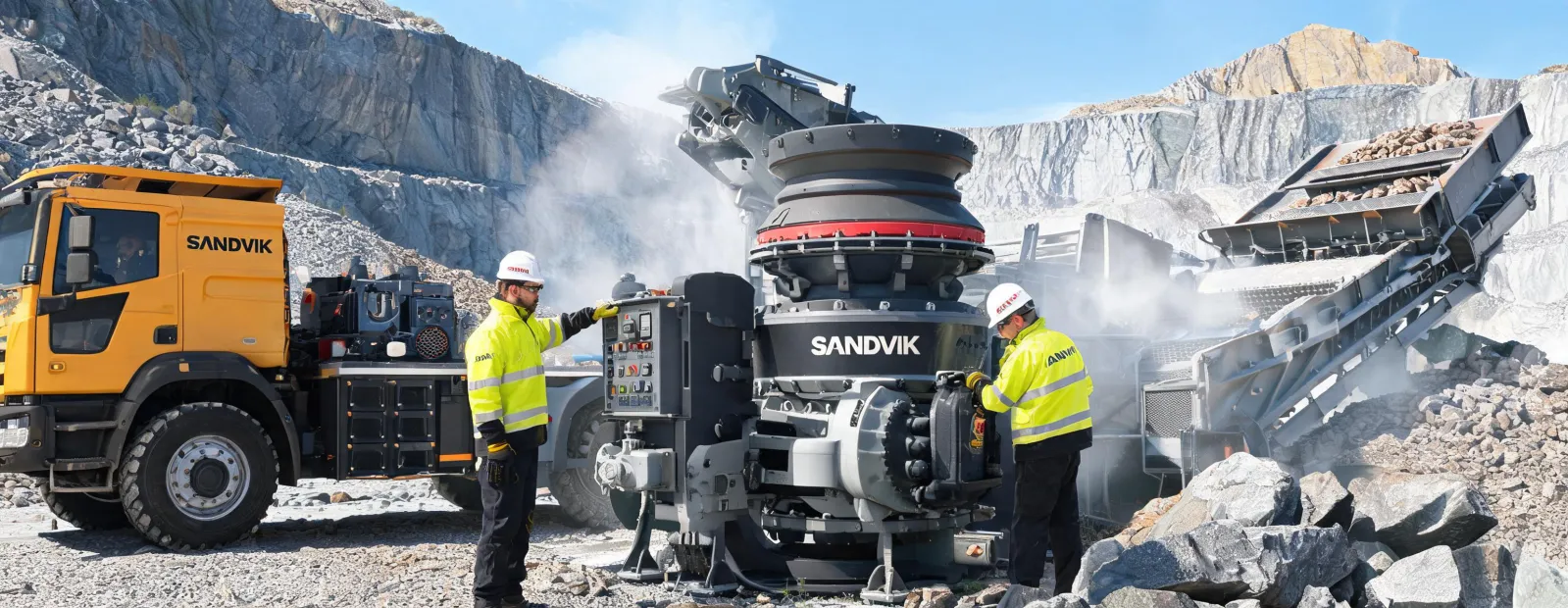
Crusher service team at quarry

Service Built for the Next 8,000 Hours On-site

Sandvik field service connects crusher chamber inspection, vibrating screen media control, drill rig rock-tool audits and mining equipment maintenance into one documented operating rhythm.

Quarry and mining teams do not buy service as a vague promise. They buy planned shutdown windows, liner change sequences, safe access procedures, consumable forecasts and a person who can explain why the plant is losing tonnes per hour. Sandvik structures its service program around the same logic used by project engineers: measure the constraint, isolate the wear mechanism, document the correction and keep the plant running inside its design envelope. A service recommendation can include production sampling, screen motion checks, oil analysis, liner change planning, training records and a parts list tied to actual operating hours.

Pre-delivery Commissioning

Before equipment is released, Sandvik reviews guarding, hydraulic pressure, lubrication points, chamber setup, screen media, belt alignment and electrical interlocks. The handover pack gives site teams a baseline for feed ramp-up and production acceptance.

Scheduled Field PM

Field engineers inspect crusher liners, jaw die seating, cone CSS drift, vibrating screen stroke, bearing temperature, drill consumables and conveyor transfer points on planned intervals matched to hours and tonnes processed.

Major Overhaul & Rebuild

At heavy wear intervals, the team coordinates liner replacement, bearing inspection, hydraulic reseal, structural crack checks, screen deck refresh and reactivation runs so the next shift starts with verified data.

Maintenance Rhythm by Operating Interval

Each interval is intended to give the reliability engineer evidence, not anecdotes. Sandvik records the actual condition of the chamber, drive, hydraulic and support systems, then compares the result with material abrasiveness, moisture and feed consistency.

  1. 01

    0h Pre-delivery

    Crusher chamber alignment, lubrication baseline, guarding map and no-load run are logged before shipment.

  2. 02

    250h First Check

    Early liner seating, bearing temperature, screen bolt torque and conveyor tracking are verified after ramp-up.

  3. 03

    500h Fluid and Wear Review

    Hydraulic oil, gearbox oil, grease consumption and manganese wear pattern are checked against site feed data.

  4. 04

    1000h Major PM

    CSS calibration, screen stroke confirmation, belt scraper condition and safety interlock checks are documented.

  5. 05

    8000h Rebuild

    Critical bearings, liners, hydraulic seals, structural welds and access systems are rebuilt or certified for continued operation.

For contracted sites, Sandvik service targets are expressed as measurable commitments. A quarry can plan around mean-time-to-repair, first-time-fix rate and stocked wear parts. A mine can forecast liner consumption by tonnes processed. A tunnelling contractor can align rock-tool availability with the planned advance rate. That practical structure reduces emergency purchases and keeps maintenance from becoming a production surprise.

< 18hMean-time-to-repair target
95%First-time-fix program goal
200+Certified field engineers
22Regional parts hubs

Schedule a fleet PM audit on your installed base.

Send hours, tonnes processed, material type, current liner life, unplanned downtime records and photos of the feed arrangement. Sandvik engineering will return a service scope that separates urgent risks from planned improvements, including chamber settings, media changes and stock recommendations.

The audit is built for plant managers who need a defensible plan before shutdown approval. It can cover jaw crushers, cone crushers, screens, drill rigs, rock tools and underground mining equipment in one report.