Chamber Selection Discipline
Jaw, cone and impact chambers are matched to feed gradation, abrasion index and downstream screen aperture before quotation.
Sandvik supports aggregate, mining and tunnelling operators with engineered crushing plants, vibrating screens and rock tools specified around feed size, CSS setting, screen aperture and service access.
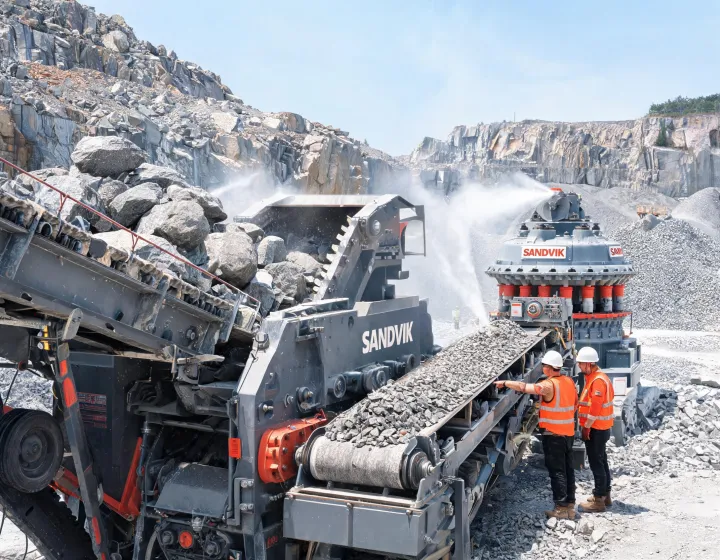
| Feed size | Up to 1,000 mm blasted granite, limestone or recycled concrete |
|---|---|
| Chamber | Deep jaw geometry with replaceable manganese wear plates |
| Documentation | Foundation drawing, guarding map and commissioning checklist |
| CSS range | Fine, medium and coarse liner packages selected by gradation target |
|---|---|
| Automation | Hydraulic adjustment, tramp release and chamber level monitoring |
| Wear tracking | Liner life trend review by tonnes processed and material abrasiveness |
| Deck layout | Two, three or four deck vibrating screen with modular media |
|---|---|
| Control point | Moisture, aperture, stroke angle and recirculating load |
| Access | Walkway, guarding and safe media change procedure |
| Tools | DTH hammers, top hammer bits and bench drilling consumables |
|---|---|
| Service | Bit wear inspection, flushing air review and drill string handling audit |
| Output | Fragmentation profile aligned to jaw crusher feed envelope |
Jaw, cone and impact chambers are matched to feed gradation, abrasion index and downstream screen aperture before quotation.
Hydraulic setting logs and liner wear records keep aggregate gradation stable through the full wear life.
Guarding, emergency stop zones and access platforms are reviewed against CE machinery expectations before commissioning.
Drill bit selection is tied to fragmentation targets so the primary jaw receives material inside the designed feed envelope.
Crusher liner rotation, vibrating screen media change and conveyor handover support are scheduled around operating windows.
Grease points, hydraulic panels and wear parts are arranged for safe access with lockout and inspection steps documented.
We need feed top size, hourly throughput target, material density, abrasion index, moisture range and the required product curve after secondary crushing.
Yes. Send belt scale data, screen aperture, cone CSS history, liner change dates and photos of the feed arrangement. We return a practical restriction map.
We check stroke, media opening, feed distribution, moisture and recirculating load. The recommendation may be media change, deck angle adjustment or feed-box redesign.
Typical commissioning covers cold checks, no-load run, feed ramp-up, guarding verification, emergency stop checks and operator handover logs.
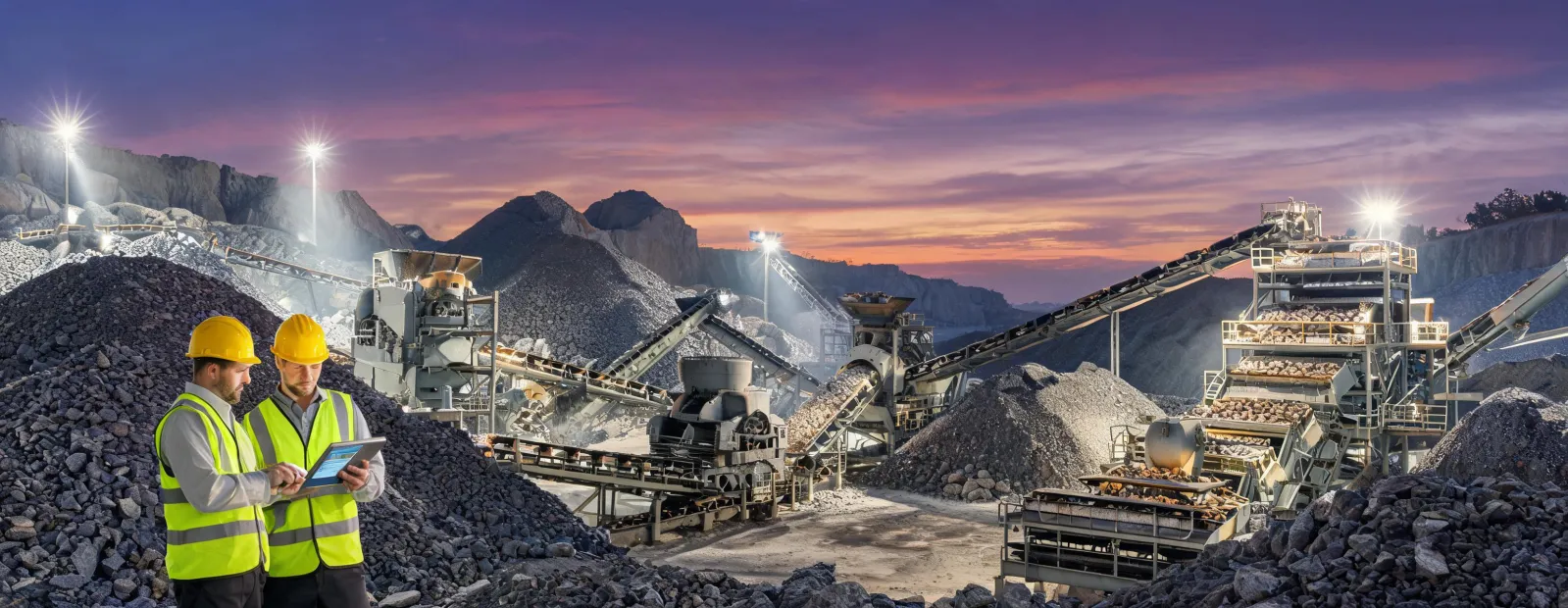
Send material data, target gradation and site constraints. Sandvik engineering will map the crusher, screen and rock-tool package.
Talk to a Field-service Engineer